
Building Inclusive Community & Bridging Divides
The Land Peace Foundation

We live in not just interesting times, but in profoundly challenging times. Not only do we face the climate crisis, but a never ending cascade of crisis - ecological, political, economic, existential. You might even say it’s not turtles, but crisis all the way down. It’s overwhelming to say the least: a 2021 poll showed that 56% of young people think that humanity is doomed (cf Dr. Margaret Klein Salaman).
So what then must we do?
Many of our wisest activists have advised that we urgently need to rebuild community. That certainly seems like a good starting point, and yet without the skills to do so, we are left repeating the same mistakes again and again. We have never had so many rich tools of communication, yet such a dearth of knowledge/skills on how to use them. It’s like a re-enactment of the Tower of Babel but with the megaphones of (so-called) social media.
There are alternative approaches.
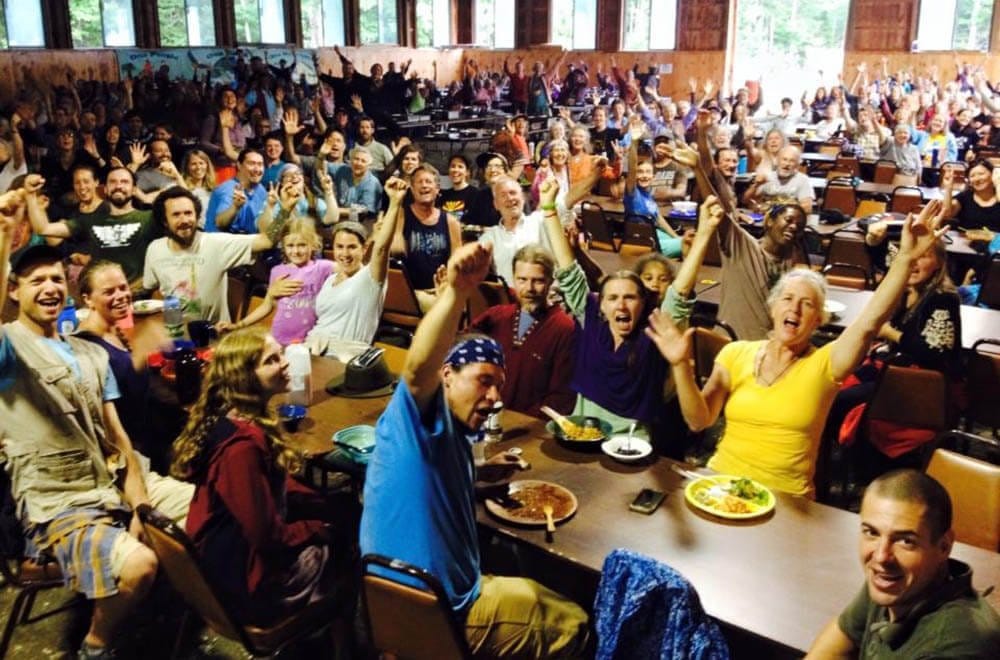
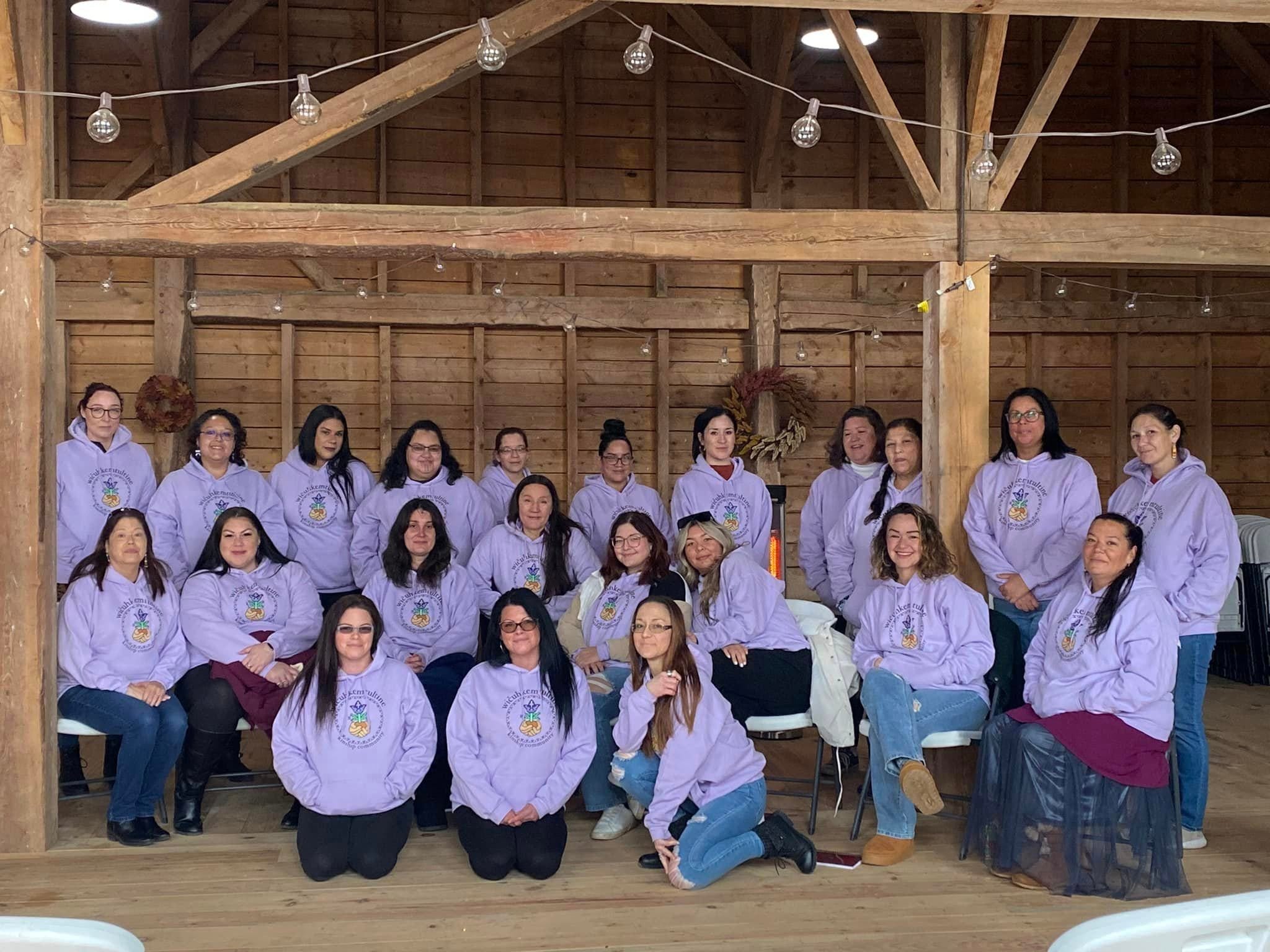
In fact, one such alternative is demonstrated by the Land Peace Foundation. Two of their programs are particularly noteworthy: the Wabanaki Leadership Institute (WLI), and the EcologyShifts Cohort. The two programs are complementary in that WLI is focused on the indigenous (Wabanaki) community, and EcologyShifts is focused on the wider community of those engaged in forestry, fisheries, permaculture, renewables, etc. Woven through both programs are themes of rematriation and justice for all: humans, nonhumans, and the living Earth.
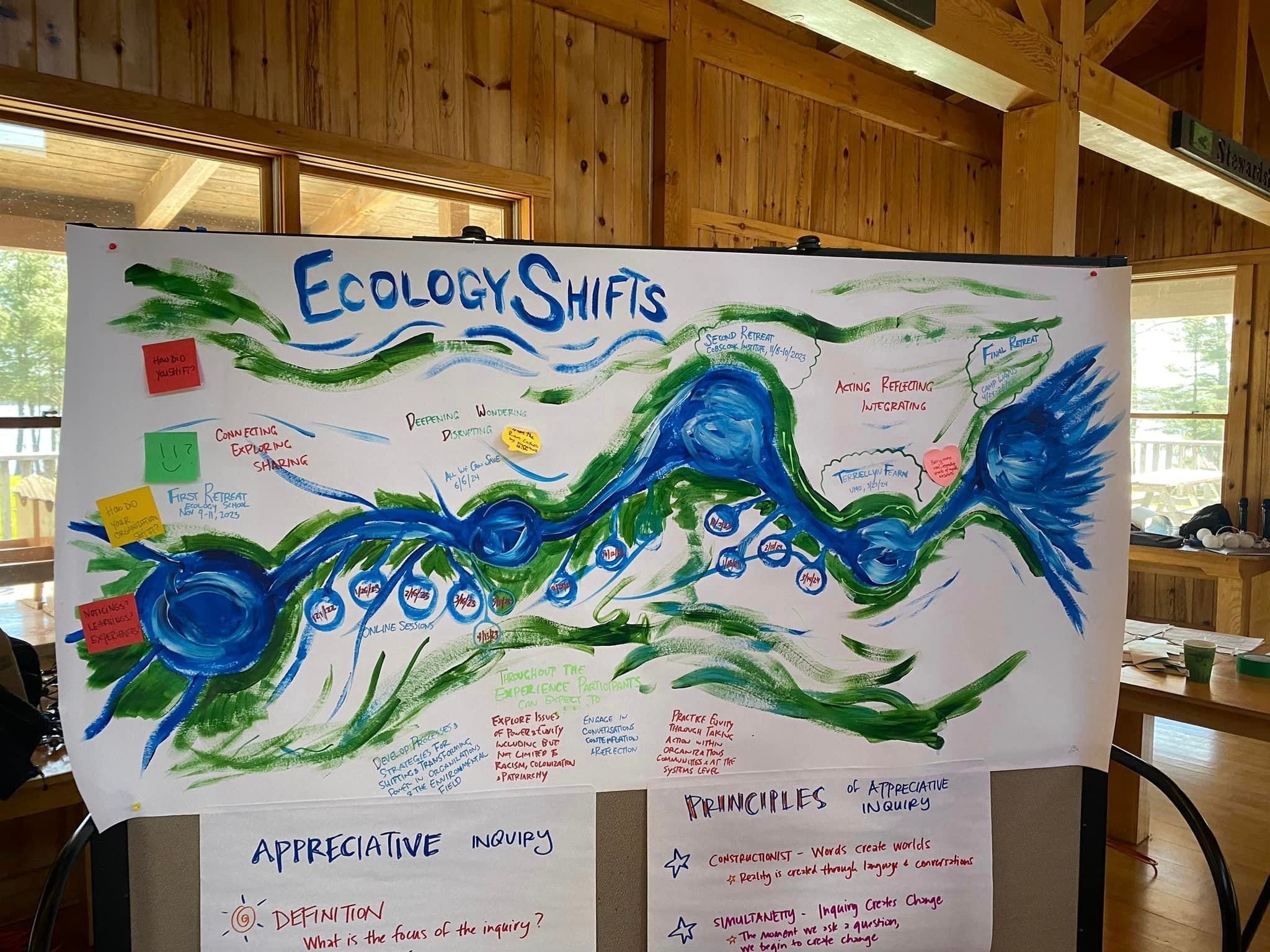
What is remarkable about these programs is that they are 18 months long, which provides for a deep process of engagement and community building. While the shorter duration of conferences and workshops are useful for exchanging information, the longer time frame employed here serves to promote deeper connections, and more thorough percolation of ideas and actions leading towards lasting beneficial effects. This is real community-building: inter-generational, cross-cultural and interdisciplinary interactions over a prolonged period.
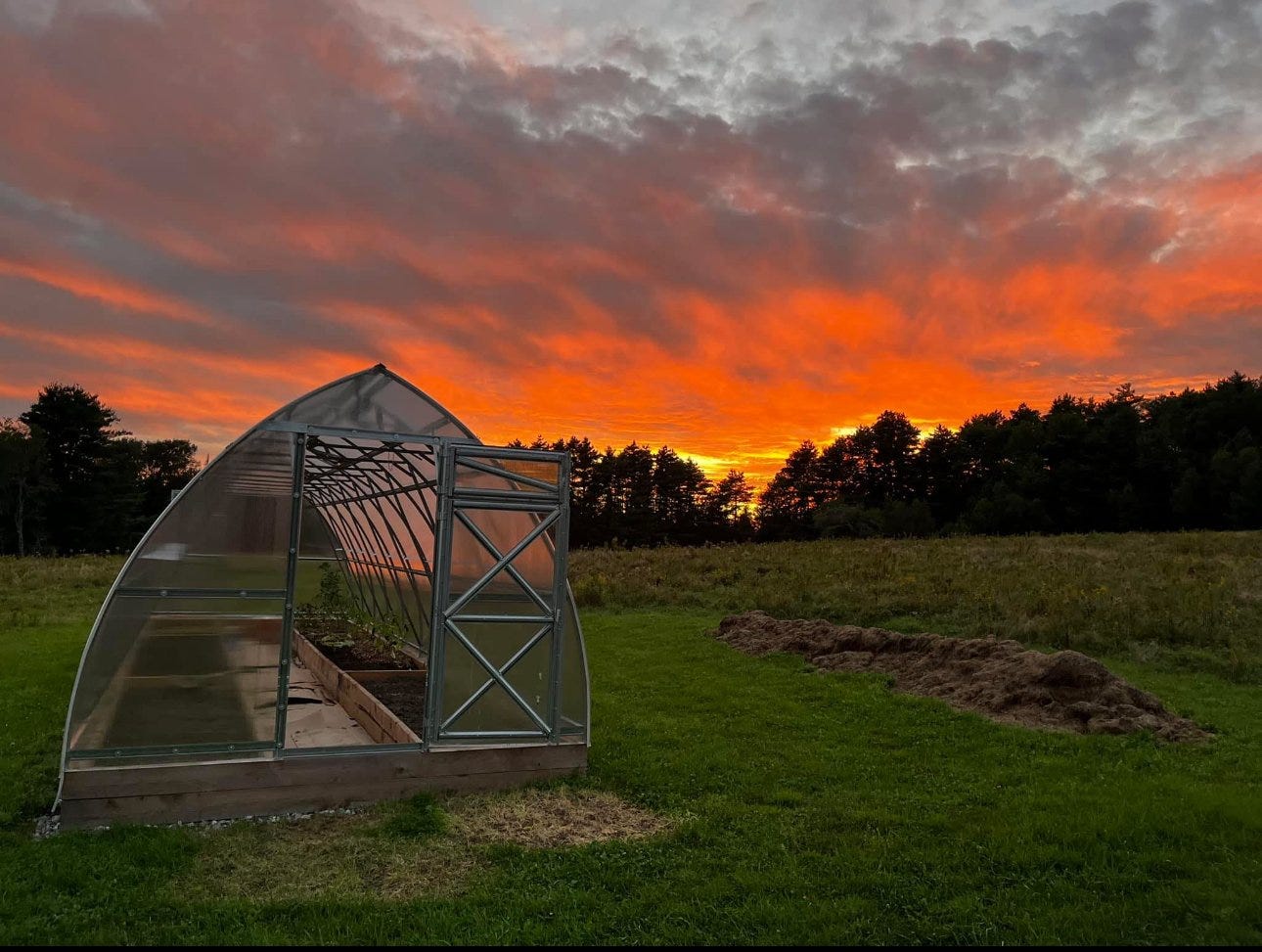
Crucially, what grounds these programs is a 215 acre farm which is cultivated and stewarded in keeping with the traditions of the Penobscot Nation. The rich cultural practices as applied to the land, rejuvenating both practitioners and the land itself: the ceremonies of deep time made manifest and literally bearing fruit.
In an interview, the founder of the Land Peace Foundation, Sherri Mitchell, recounted a crucial story from her childhood: growing up on the island reservation in Penobscot territory, there was a bridge to the mainland, but her grandfather warned her “I cannot keep you safe if you cross that bridge”. Her 10 year old friend tried to convince her to join him crossing the bridge, but she decided against it. He returned bleeding and covered in buckshot, after being shot by someone on the other side.
A lifetime of experiences like these have left many people with hearts on the ground and angry at the injustice. But Sherri Mitchell has taken an honorable path of seeking justice through studying law, and building a Foundation dedicated to enriching the lives of all - both her own community and the wider (non-indigenous) community.
Undergirding the programs running at the Land Peace Foundation is the wisdom so carefully outlined in the Sacred Instructions book by Mitchell. It is crafted like a well researched ethnography, but in this case relayed by someone who has grown up immersed by the stories of her grandfather, and trained as a lawyer in indigenous justice. Her words and stories lift up the worldview of the Penobscot Nation, not in nostalgia or superiority, but in a way that reclaims its place as a valid and sustainable way of being in the world.
At a time when the preponderance of respected scientists are warning us that the current western lifestyle is not merely unsustainable, but leading to the 6th mass extinction event, along with climate chaos, ocean rise, potential current collapse, and major crop failures, among many other apocalyptic scenarios — considering other ways of being in the world (which have outlasted the western model by centuries) is an idea worth considering. Despite the typical response to such ideas, this does not imply a return to a pastoral life for everyone. What the Land Peace Foundation does demonstrate is an alternate model of building community, which reaches across cultures. As we try to find our way through the unsustainable systems which are collapsing around us, there are lessons to be learned from this inclusive model of community building, which may well serve to help us adapt.
Can these bridges being built at the Land Peace Foundation be a model for others to adapt and deploy? Only time will tell. But one thing is certain: in these fractious times, we need more than ever to build community with all of the wisdom and experience of as much of the long-lived cultures as possible.
Bonus link - Interview Sherri Mitchell: Sacred Instructions and Rematriation; host Shayla Oulette Stonechild
Hello Kevin, thank you for this. I didn't know about the land peace foundation, I've reviewed it a little and it's just what I needed to investigate how to integrate indigenous communities. I really think they have a key to a society totally disconnected from nature. I'll keep investigating it!